

The UK's higher education system is now home to more than 2.8 million students. The vast majority are from Generation Z, with the first members of Generation Alpha already beginning to enter the pipeline. This is more than a demographic shift within education; it is a behavioural one. Today's students arrive on campus shaped not only by classrooms and schools, but by years spent learning, communicating and building their identities online.
Social media has become a parallel education system. It is where young people discover ideas, test opinions, explore cultures and increasingly learn how to navigate the world. Ofcom reports that UK 16–24s now spend close to four hours a day on their smartphones, and GWI data shows that more than half of Gen Z discover new brands, products and even career paths through social platforms before any traditional channel. For some, it has been a teacher; for others, a mentor, a travel guide, or even a first career adviser. Platforms once dismissed as distractions have become spaces for learning, influence and community-building, fundamentally shaping how young adults engage with institutions, brands and each other.
For most Gen Z students in the UK, social media is not an activity; it is part of daily life. It is where friendships are built, identities are shaped, communities are discovered and opinions are formed. For Gen Alpha and for Zalphas, that relationship with technology runs even deeper.
Their experience of digital life is less about individual platforms and more about connected environments. Social media has already served as a classroom, a search engine, a social space and a source of entertainment, often all before secondary school. Gen Z still remembers the transition into digital life: receiving their first smartphones, opening their first social accounts, and gradually integrating technology into everyday routines. Gen Alpha does not. Artificial intelligence, personalised algorithms, voice assistants and immersive online spaces are not innovations to them; they are simply how the world works.
What Gen Z, and especially Zalphas and Gen Alpha, expect from digital platforms is fundamentally different from what Millennials or older generations ever demanded. They expect immediacy, personalisation and relevance as standard. They expect digital experiences to adapt to them, not the other way around.
That shift is already challenging traditional institutions. For years, organisations spoke and audiences listened. That model is weakening. Younger generations increasingly place their trust in what feels authentic, immediate and socially validated. They are influenced less by polished institutional messaging or paid sponsorships, and more by peers, creators and communities. Relevance is judged instantly, and traditional institutions often struggle to move at that speed.
But there is another important shift underway. Despite living so much of their lives online, younger users are increasingly dissatisfied with the digital spaces they inhabit. Students describe mainstream social platforms as overwhelming, distracting and emotionally draining. They talk about doomscrolling, algorithm fatigue and the growing sense that too much of what they consume online adds very little value to their lives.
The next generation still wants to be social but on different terms. They want greater control over what they see, who they engage with and how their attention is used. They want fewer irrelevant voices, stronger communities and digital spaces that feel intentional rather than addictive.
That desire for control is likely to become one of the defining behavioural shifts of the next decade. And it presents a challenge to today's dominant platforms, many of which continue to prioritise paid content, shallow personalisation and attention-maximising design models that increasingly feel outdated to younger audiences.
The next generation needs an alternative. Platforms built with young people at the centre, designed to grow and evolve alongside them. What is needed is a new digital ecosystem, one where communication, services, identity and community work together naturally. An experience built not around endless feeds or superficial personalisation, but around how younger people actually live: seamlessly, socially and across multiple layers of digital life.
While mainstream platforms have responded to dissatisfaction with more ads and louder algorithms, ZYMIX is building around a different premise: social at the core, services in extension. Every part of the product is designed to address what Zalphas are actually asking for.
Against doomscrolling and algorithm fatigue: ZYMIX puts control back where it belongs. In the hands of the user. Communities, conversations and creators are surfaced because they are relevant and meaningful, not because someone paid for visibility.
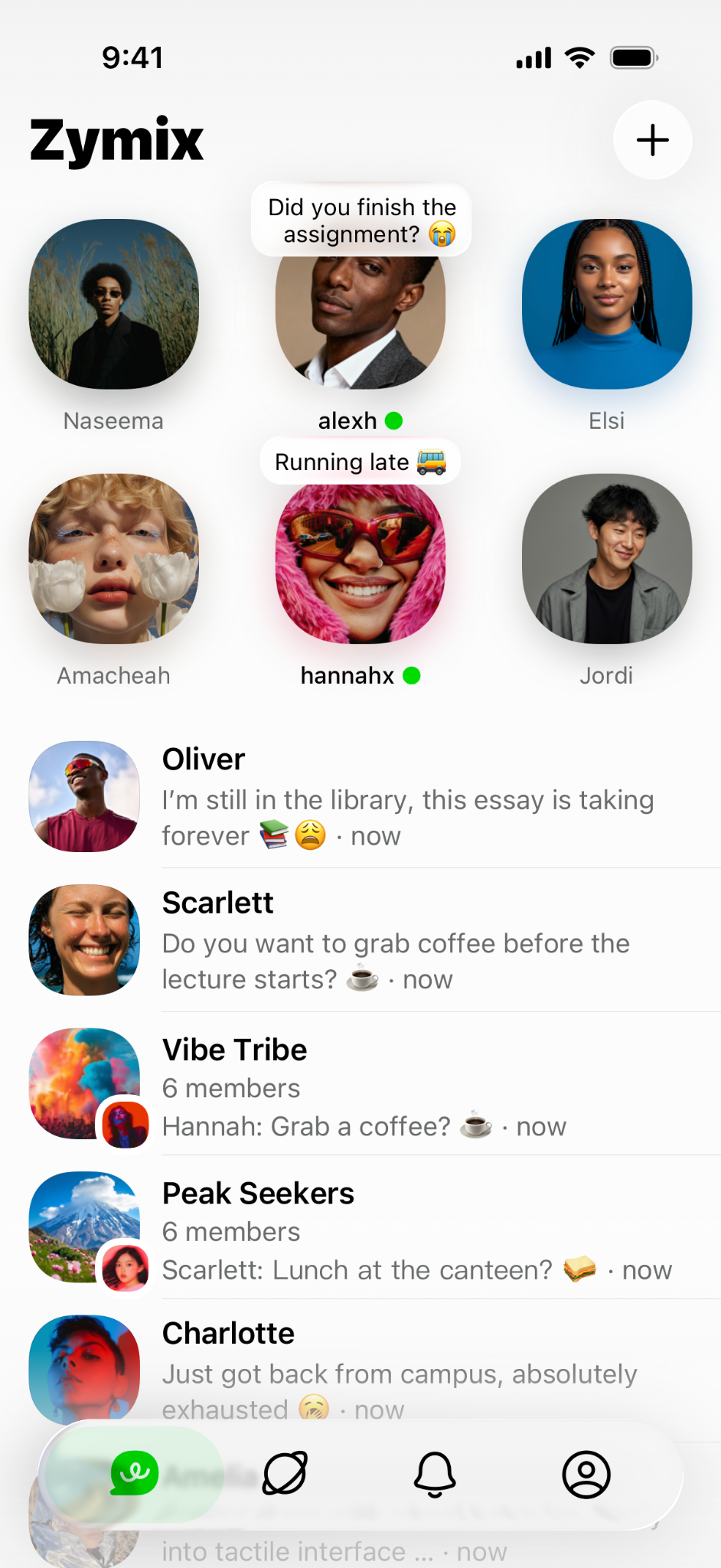
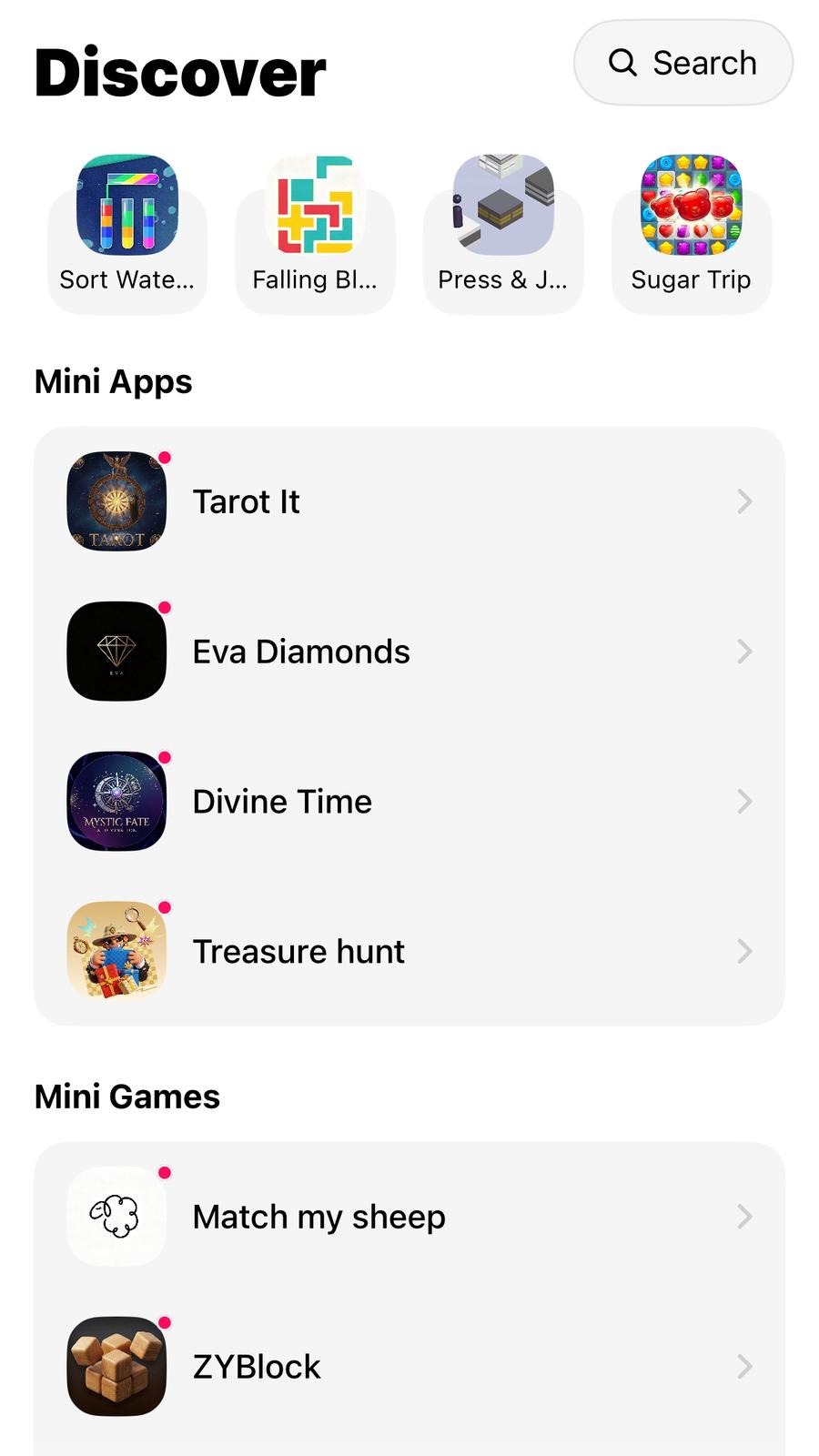
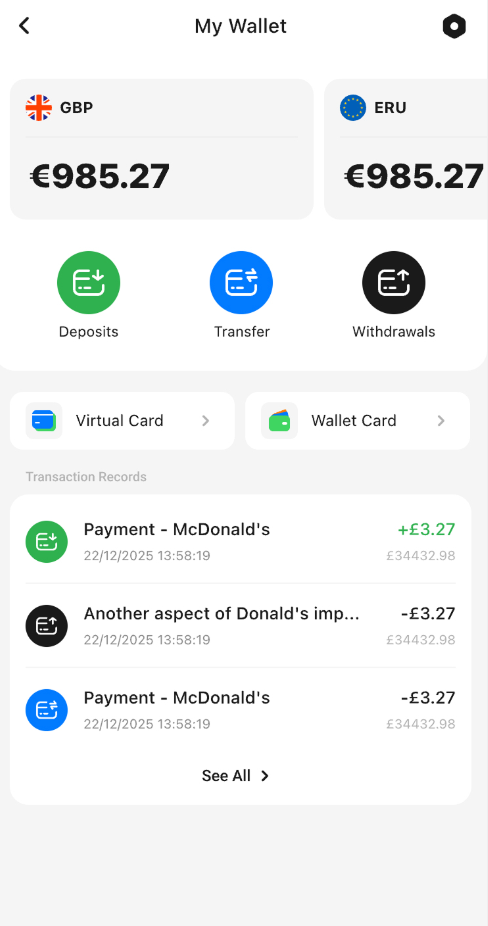
Against fragmented digital lives: With ZYMIX as a superapp, young adults no longer need to jump between a messaging app, a video platform, a payments tool and a social network. Communication, short-form content, communities and everyday utilities, from messaging to bill-splitting, are brought together in one connected ecosystem.
ZYMIX launches across UK universities in Autumn 2026. Join the first wave and get early access by downloading ZYMIX on App Store or Google Play.

